Editorial context: practical handling ideas and questions are examples, not tested breed-specific outcomes or guarantees. Read the source scope and limitations below.
Training games and household examples are editorial applications, not breed-specific trial findings. Standards describe ideals, not individual predictions. Screening items are selected current pre-breeding signposts, not a complete list of illnesses or an individual health assessment.
The smooth-haired Hungarian gundog
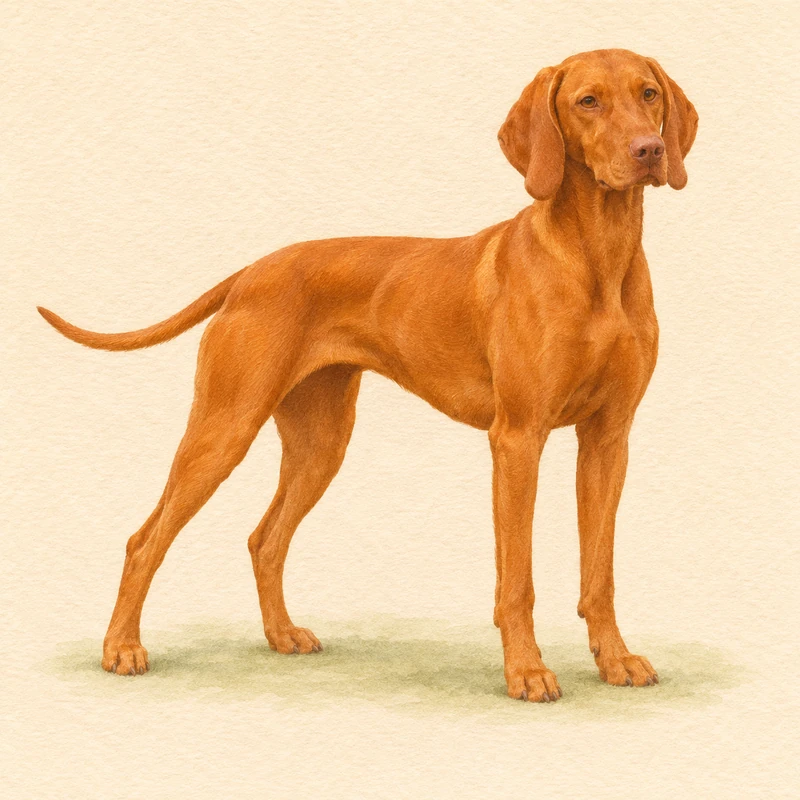
This guide concerns the Hungarian Vizsla, not the separately named Hungarian Wirehaired Vizsla. The Royal Kennel Club describes Hungarian origins, while its standard records a role in pointing and retrieving on land and water. Heritage supplies context, not proof that an individual enjoys swimming or hunting-style games.
Affection is not a training plan
The standard’s ideal is lively and affectionate, but dogs differ in sociability, confidence and tolerance of busy surroundings. Ask what helps this Vizsla settle and how it responds when people move away. Avoid interpreting breed praise as a promise of effortless family life.
Editorial practice example based on general guidance, not a breed-specific trial finding.
Smooth rather than wire-haired
The standard describes short, straight, dense hair with a smooth surface and a russet-gold colour. Do not import wire-coat maintenance advice from the Hungarian Wirehaired Vizsla. Choose grooming for the hair actually present, with comfort taking priority over a polished appearance.
Give searching a simple finish
Hide a familiar toy in an easy, safe place and reward finding it. Finish while the dog remains engaged; this is an optional reward-based game.
Editorial practice example based on general guidance, not a breed-specific trial finding.
Do not feed the stereotype
Select complete food appropriate to the Vizsla’s life stage and health. A gundog history does not establish the energy needs of a particular household companion.
Editorial practice example based on general guidance, not a breed-specific trial finding.
Include curiosity, not only distance
Let suitable walks include sniffing and exploration. Adjust activity to age, health and fitness, rather than treating a sporting background as an obligation to cover a set distance.
Editorial practice example based on general guidance, not a breed-specific trial finding.
Notice changes in the ordinary routine
Keep track of appetite and body condition as your Vizsla matures. Unexpected weight or eating changes deserve veterinary review rather than simply adding more food for an active-looking dog.
Editorial practice example based on general guidance, not a breed-specific trial finding.
Read the eye-testing detail
The Royal Kennel Club’s selected pre-breeding screening signposts list hip and elbow testing plus eye testing that includes gonioscopy for pectinate ligament abnormality. Ask for the actual records and a veterinary explanation of their meaning. The smooth-haired breed’s listing is the relevant one here. These signposts are not a complete list of illnesses or an individual health assessment, and screening cannot promise a problem-free future.
Build a positive short-coat routine
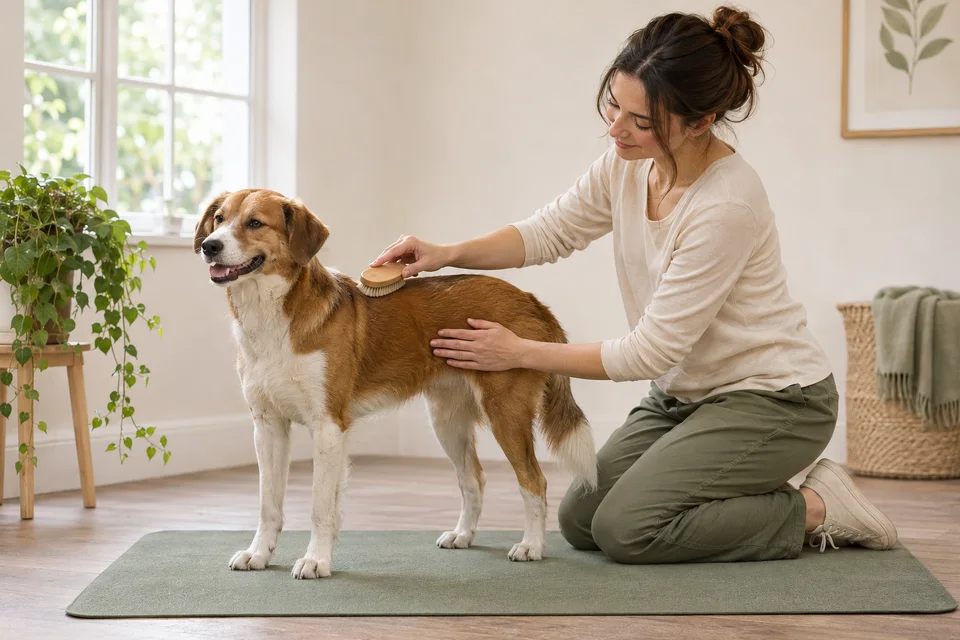
Keep brushing gentle and suited to the coat. Introduce it in brief, positive sessions; a dog leaning away is a reason to pause and reassess.
Editorial practice example based on general guidance, not a breed-specific trial finding.
Keep the face out of the spray
When washing is needed, use suitable dog shampoo, rinse and dry. Keep water and lather away from the eyes, nose and ear openings.
Editorial practice example based on general guidance, not a breed-specific trial finding.
Choose retrieving objects carefully
Avoid throwing sticks and check playthings for loose pieces. Select a dog toy too large to swallow whole; enthusiasm for fetching is not evidence that any found object is safe.