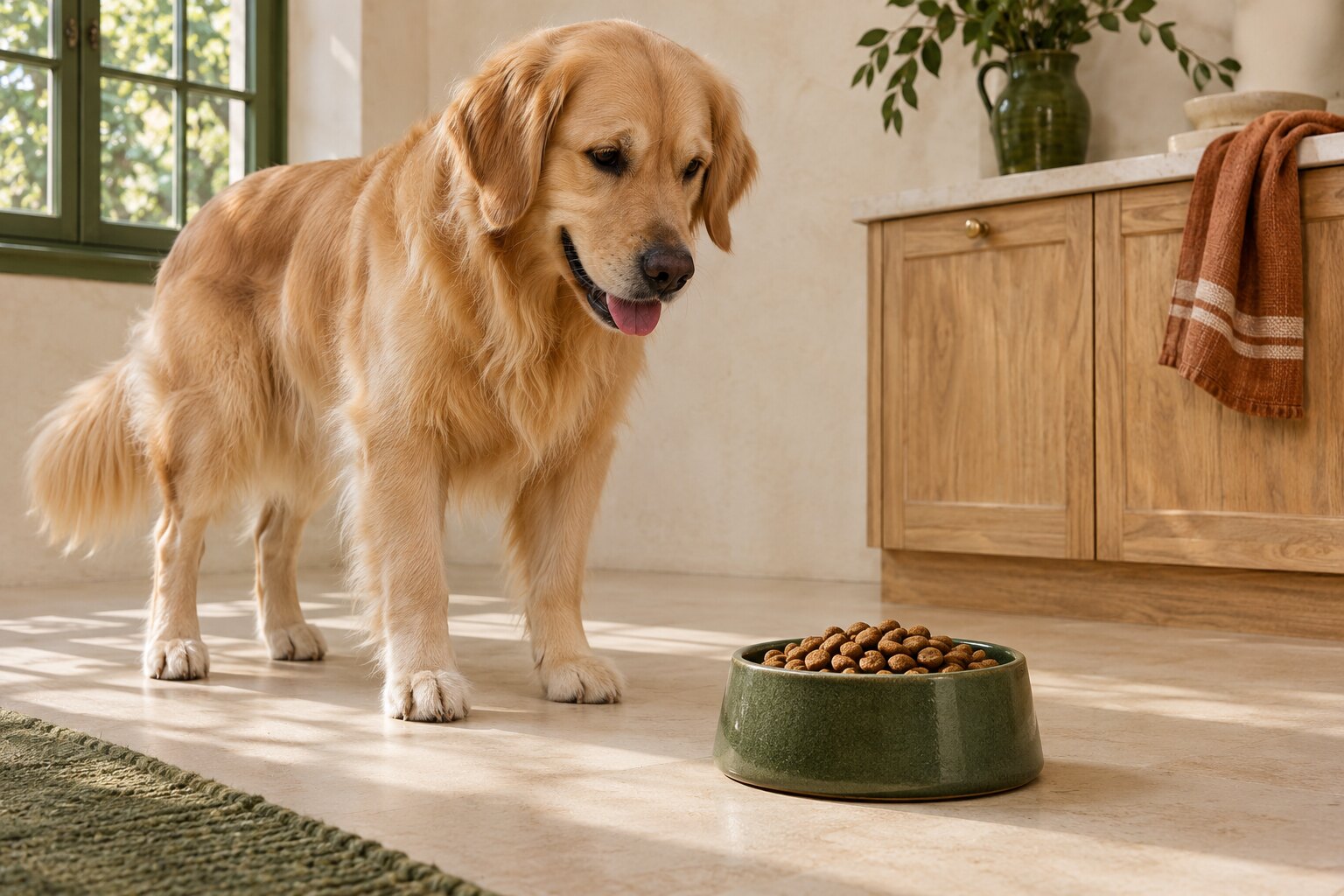
Read the life-stage label.
Choose a complete food for adult dogs. Complementary foods cannot provide the whole diet alone.
If you are planning home-prepared meals, ask your vet for help from a veterinary nutritionist rather than improvising a recipe.
British Veterinary Association: What should I feed my dog?Cornell University: Re-evaluating your dog’s dietMeasure what goes in.
Weigh portions and record meals and extras together. Review the amount with your veterinary team.
There is no single portion for every adult dog. Size, activity and individual needs matter; this guide does not calculate a daily allowance.
British Veterinary Association: What should I feed my dog?Purdue University: Adult Maintenance Nutrition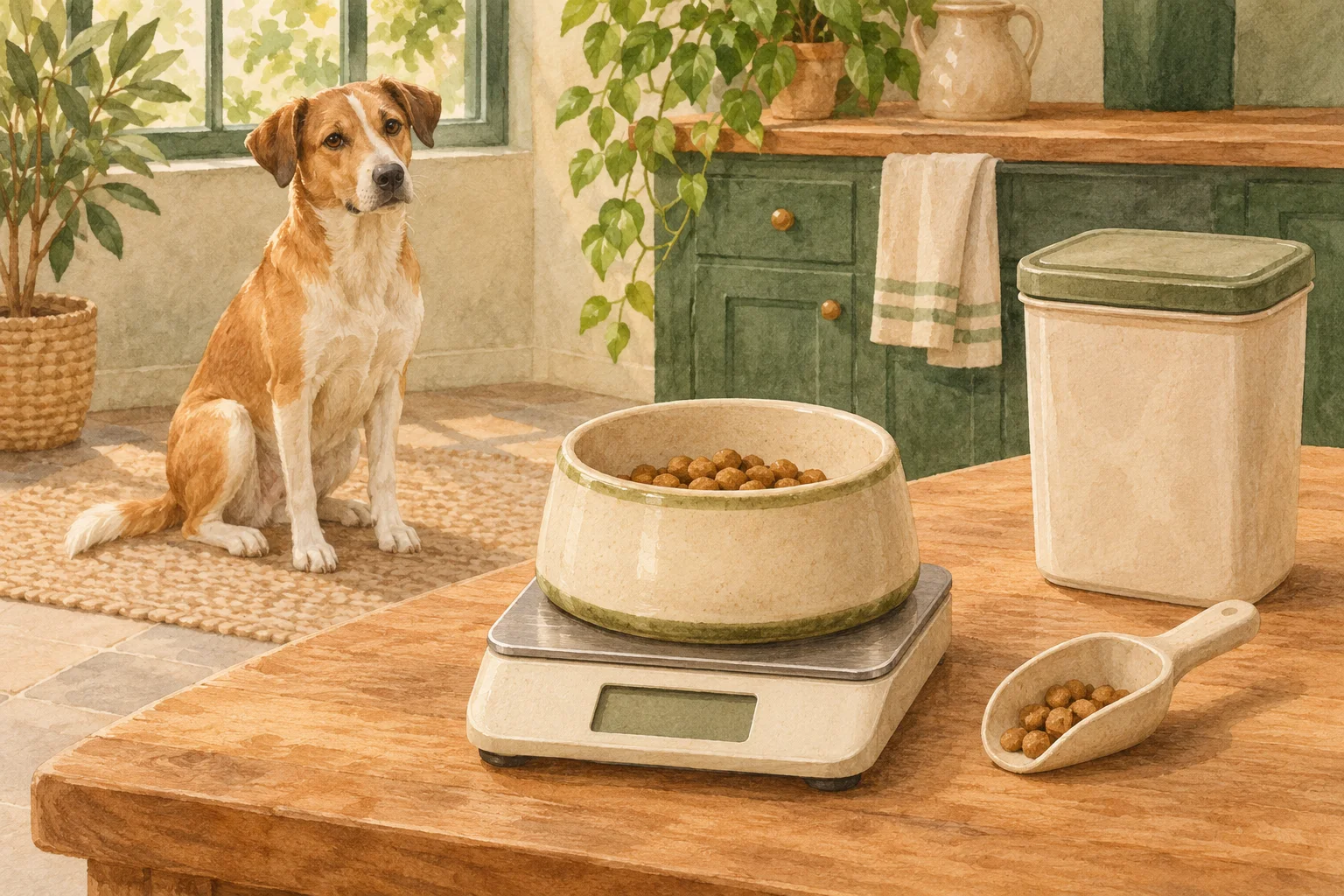
Check the dog, not just the bowl.
Maintaining a suitable weight and body condition is the aim. Ask your vet to show you how to use a body-condition chart and review changes over time.
A stable feeding habit is useful, but it is not proof that the amount still fits. Bring weight or condition changes to your veterinary team.
Purdue University: Adult Maintenance NutritionBritish Veterinary Association: What should I feed my dog?Count the little extras.
Training rewards and table scraps can add up. Keep treats a small part of the day’s food rather than allowing them to displace balanced meals.
One simple option is to reserve part of the usual daily food for rewards. Tell everyone who feeds your dog what has already been given.
Cornell University: Re-evaluating your dog’s dietLet the routine fit their needs.
Adult dogs can eat once a day or have their food divided between meals. Choose a practical routine that fits their needs, with your vet’s advice where needed.
Review feeding when activity or circumstances change. A different routine is a reason to reassess, not an automatic instruction to add or cut food.
Purdue University: Adult Maintenance NutritionChange thoughtfully. Ask when unsure.
Make food changes gradually. If your dog has specific dietary needs or a prescribed diet, speak to your vet before changing foods or adding extras.
Persistent digestive trouble needs veterinary assessment, not repeated food experiments. Home-prepared or temporary bland meals should not become a long-term diet without nutritional advice.
British Veterinary Association: What should I feed my dog?Cornell University: Re-evaluating your dog’s dietKeep a useful feeding record.
- The food label and measured meals.
- Rewards, scraps and other extras.
- Changes in activity, weight or appetite to discuss with your vet.