Editorial context: practical handling ideas and questions are examples, not tested breed-specific outcomes or guarantees. Read the source scope and limitations below.
Training games and household examples are editorial applications, not breed-specific trial findings. Standards describe ideals, not individual predictions. Screening items are selected current pre-breeding signposts, not a complete list of illnesses or an individual health assessment.
German roots behind the name
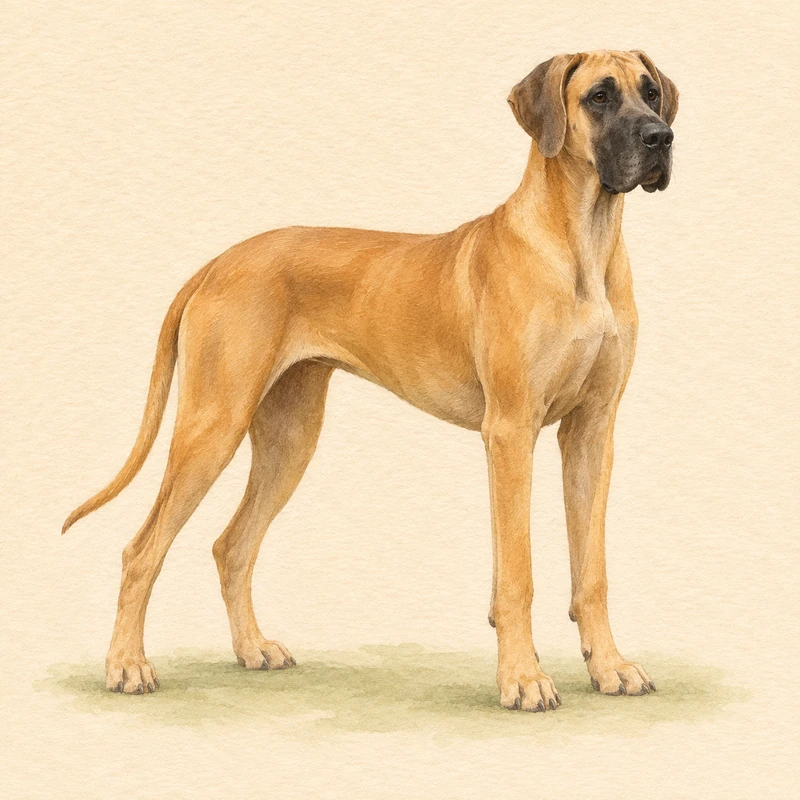
Despite its name, the Royal Kennel Club places the Great Dane’s origins in Germany and describes ancestors used in packs to hunt wild boar. Its present-day size needs practical planning, but the historical role does not prescribe how a companion dog should behave.
Meet the dog, not the nickname
Descriptions of a gentle giant are not an assessment of a particular Great Dane. Ask about everyday greetings, rest and handling. An editorial home-planning exercise is to imagine the dog turning around at the front door while another person enters, then arrange enough uncluttered space.
Editorial practice example based on general guidance, not a breed-specific trial finding.
A sleek surface over a large body
The breed standard calls for short, dense hair with a sleek appearance. There is still a whole dog to inspect beneath that simple outline. Build comfortable access to different areas into care rather than assuming a short coat makes every handling task easy.
Teach a station before busy moments
Reward the Dane for choosing a roomy resting place while the house is quiet. Practise before deliveries arrive; avoid pulling or frightening the dog into position.
Editorial practice example based on general guidance, not a breed-specific trial finding.
Growth food is a specific discussion
A Great Dane puppy needs food suitable for large or giant-breed growth. Ask your veterinary team to check suitability and growth progress; do not improvise extra calcium to accelerate development.
Editorial practice example based on general guidance, not a breed-specific trial finding.
Plan for the body you have today
Introduce activity gradually, especially during growth. A practical starting point is a route with easy turning space and opportunities to stop, adapted to the individual rather than a universal giant-breed quota.
Editorial practice example based on general guidance, not a breed-specific trial finding.
Keep feeding decisions responsive
Appetite, body condition and health can change as a Dane matures. Review those changes with your vet instead of treating the puppy feeding plan as permanent.
Editorial practice example based on general guidance, not a breed-specific trial finding.
Screening and heart care are separate
The Royal Kennel Club’s selected pre-breeding screening signposts include hips, elbows, eyes and a DNA test for inherited myopathy of Great Danes. Cornell separately identifies Great Danes as predisposed to dilated cardiomyopathy. Take the registry records to your vet and ask what assessment fits the dog. These signposts are not a complete list of illnesses or an individual health assessment.
Work in comfortable stages
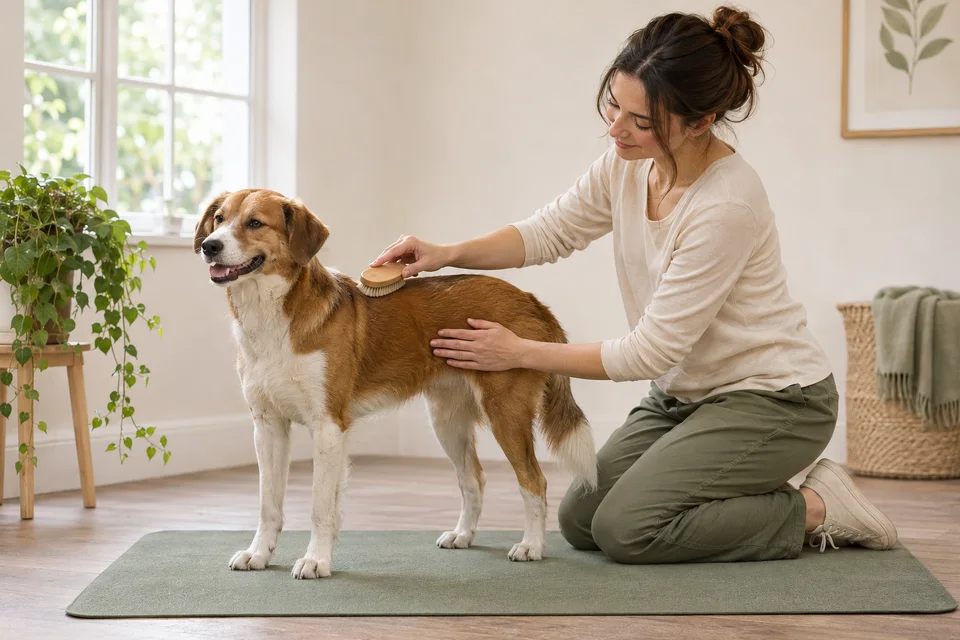
Choose a coat-appropriate brush and build positive sessions. For a large dog, dividing care into manageable areas is a practical choice, not a breed-specific treatment.
Editorial practice example based on general guidance, not a breed-specific trial finding.
Think about safe access
Plan a non-slip washing space the Dane can use comfortably. Rinse dog shampoo away and towel-dry. Ask a suitable groomer for help if safe access is difficult.
Editorial practice example based on general guidance, not a breed-specific trial finding.
Know the bloat warning signs
Unproductive retching, abdominal swelling, distress or collapse need immediate emergency veterinary care. Great Danes are a recognised risk breed for gastric dilatation volvulus (GDV), also called bloat. Discuss prevention with your vet; gastropexy reduces stomach-twisting risk but does not prevent all bloating.