Editorial context: practical handling ideas and questions are examples, not tested breed-specific outcomes or guarantees. Read the source scope and limitations below.
Training games and household examples are editorial applications, not breed-specific trial findings. Standards describe ideals, not individual predictions. Screening items are selected current pre-breeding signposts, not a complete list of illnesses or an individual health assessment.
Keep the breed identity specific
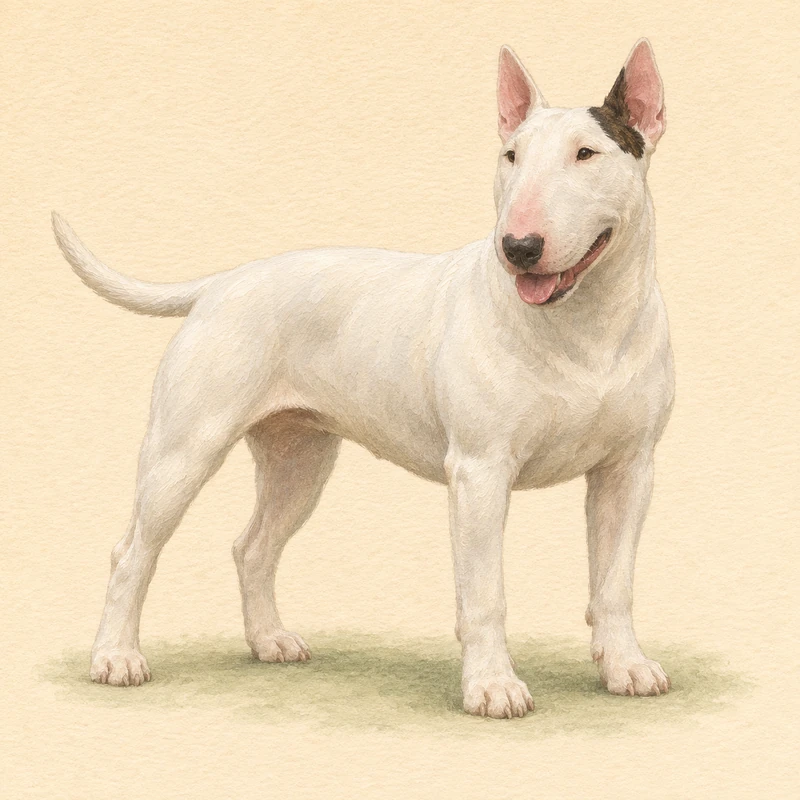
This page covers the standard Bull Terrier, not the Miniature Bull Terrier or dogs described as Pit Bulls. The Royal Kennel Club traces its development to Bulldog and White English Terrier crosses and credits Birmingham breeder James Hinks with helping stabilise type. Historical origins do not predict an individual’s behaviour.
Meet the individual behind the silhouette
The standard presents an active, muscular dog with a spirited ideal. That does not establish whether a particular Bull Terrier is comfortable with unfamiliar dogs, children or handling. Ask about observed responses and organise introductions around those, not an assumption based on head shape.
Editorial practice example based on general guidance, not a breed-specific trial finding.
Short does not mean care-free
The standard describes flat, short hair with a firm texture and notes that a softer undercoat may appear in winter. Match maintenance to the coat you see. A seasonal difference is not permission to ignore soreness, bald areas or uncomfortable handling.
Reward a voluntary handling step
Offer a reward for a brief voluntary paw presentation, without holding the paw in place. Build comfort gradually; this is a handling exercise, not a compliance test.
Editorial practice example based on general guidance, not a breed-specific trial finding.
A breed name does not diagnose allergy
Choose complete food for the dog’s life stage and health. Skin worries should be discussed with your vet rather than prompting an improvised restrictive diet.
Editorial practice example based on general guidance, not a breed-specific trial finding.
Make room for enjoyable variety
Choose activities the individual enjoys and can manage. A walk with pauses to investigate is an everyday option; the muscular outline does not justify relentless or exhausting play.
Editorial practice example based on general guidance, not a breed-specific trial finding.
Review condition rather than chasing bulk
Unexpected weight gain, loss or appetite change deserves veterinary review. For a Bull Terrier, the desired muscular appearance should not become a reason to keep increasing food.
Editorial practice example based on general guidance, not a breed-specific trial finding.
Ask to see the hearing result
The current Royal Kennel Club standard Bull Terrier listing includes hearing testing, including litter screening, among its selected pre-breeding screening signposts. Ask what was tested, request the record and ask your vet to interpret the named test and result. These signposts are not a complete list of illnesses or an individual health assessment. A casual reaction to sound does not replace the listed test.
Use grooming as a calm interaction
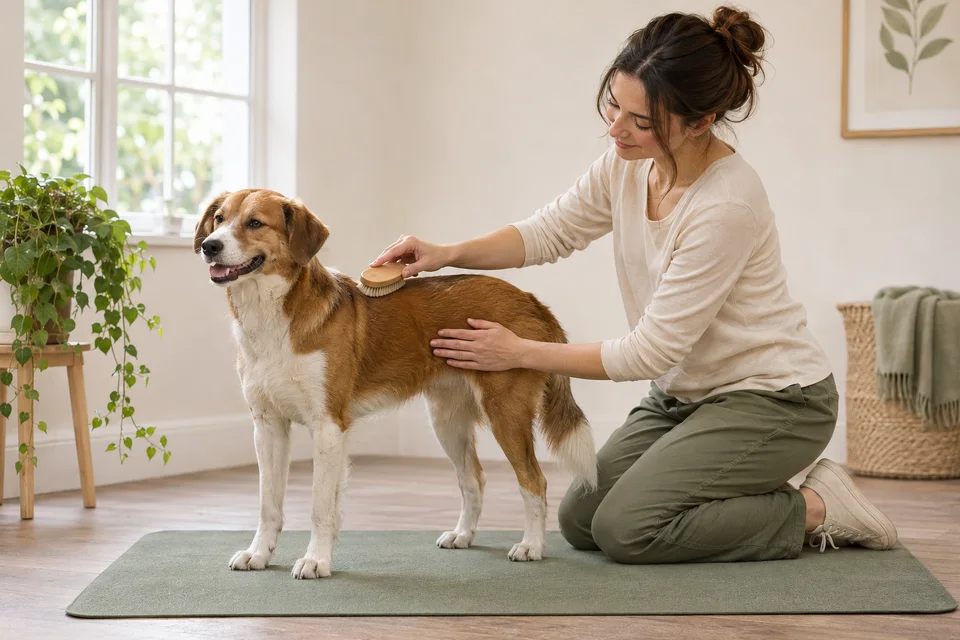
Choose a suitable coat tool and make brushing a positive experience. The short hair does not remove the need to notice whether the dog welcomes contact.
Editorial practice example based on general guidance, not a breed-specific trial finding.
Avoid turning washing into scrubbing
Use a suitable dog shampoo and rinse it away before drying. Protect the eyes and ears from the water stream; vigorous scrubbing is not the goal.
Editorial practice example based on general guidance, not a breed-specific trial finding.
Skin changes need assessment
Persistent scratching, redness, sores or bare patches deserve veterinary advice. These signs do not identify an allergy or its cause. Record where you notice them rather than choosing a treatment from the breed name alone.