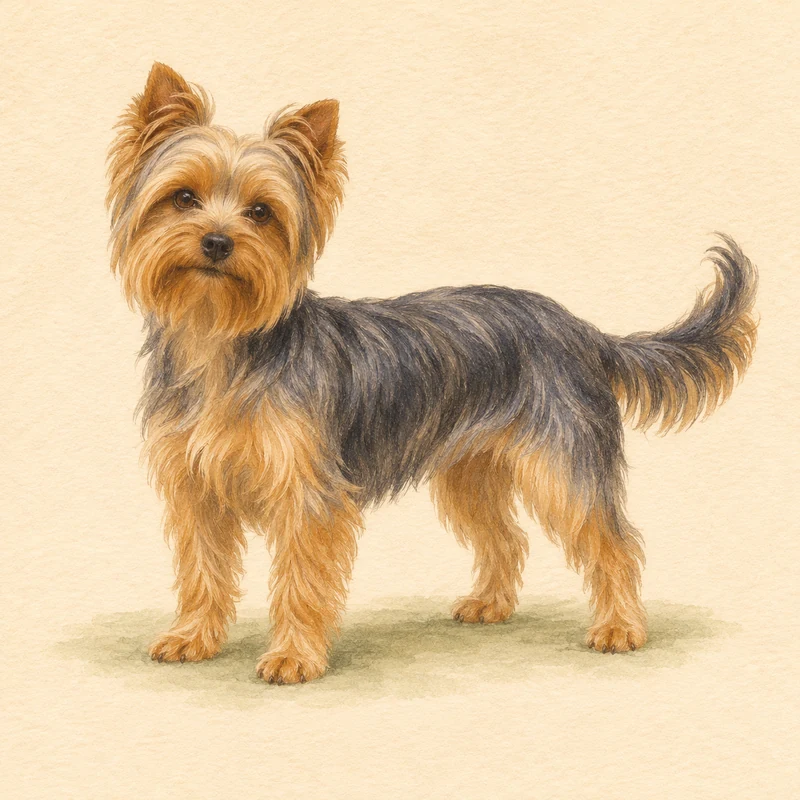
A terrier beneath the silk
The Royal Kennel Club traces the Yorkshire Terrier to working terriers associated with northern England. Its account links the breed’s development with Scottish workers bringing dogs into Yorkshire. The polished show coat belongs to a dog with terrier ancestry.
Read the evidence: Yorkshire Terrier breed background and health screening — Royal Kennel Club
Get to know the small individual
The breed standard describes an alert, spirited dog with an even disposition. Those are ideals, not promises about confidence, sociability or tolerance of handling. When meeting a dog, ask what helps them settle and what makes them uncomfortable.
Read the evidence: Yorkshire Terrier breed standard — Royal Kennel Club
Silky hair needs a plan
The standard describes straight, fine, silky hair rather than a woolly texture. A practical grooming conversation starts with the length you can maintain comfortably, not with recreating a show presentation.
Read the evidence: Yorkshire Terrier breed standard — Royal Kennel Club
Teach handling in small steps
Use rewards rather than punishment. As an everyday practice idea, reward a brief, comfortable pause for the brush, then stop before your dog becomes worried. Build the routine gradually instead of insisting on a full grooming session.
Read the evidence: Reward-based training — Australian Veterinary Association
Start with nutritional completeness
Choose complete food appropriate to the life stage. Ask your vet about a diet suited to your dog’s health, rather than choosing by breed name alone.
Read the evidence: Evaluating Pet Food — NC State Veterinary Hospital
Make room for exploring
A small dog still needs opportunities to move and investigate. Try a quiet sniffing walk or a short game, adjusting the plan to age and comfort. These are activity ideas, not a daily exercise prescription.
Read the evidence: Yorkshire Terrier breed background and health screening — Royal Kennel Club
Notice changes beyond the scales
Review portions as activity changes. Changes in appetite, weight or health deserve veterinary advice rather than assuming that an older dog simply needs less food.
Read the evidence: Nutrition — Virginia Tech Veterinary Teaching Hospital
Keep teeth on the agenda
A study published in 2025 found periodontal disease was the most commonly recorded disorder among sampled Yorkshire Terriers in UK primary-care records from 2016. That is a population finding, not your dog’s diagnosis or future. Ask your vet to assess oral health and demonstrate appropriate home care.
Read the evidence: Yorkshire Terriers under primary veterinary care in the UK — demography and disorders
Check where hair rubs
Regular gentle brushing helps prevent mats. Pay attention behind the ears and where collars or harnesses rub. If a knot is tight or painful, get professional help rather than tugging or trying to cut close to skin.
Read the evidence: Coat Care: Preventing Matted Hair — USDA APHIS
Prepare the coat first
Resolve tangles before bathing. Keep water away from eyes and ears, rinse carefully and dry the coat thoroughly.
Read the evidence: Dog Grooming Tips — ASPCA
Make the routine manageable
Before bringing a Yorkie home, decide who will handle routine coat appointments and how the dog can rest undisturbed. Ask a groomer to show the everyday checks that fit your dog’s actual coat. This is a planning prompt, not a medical checklist.
Read the evidence: Coat Care: Preventing Matted Hair — USDA APHIS
Sources & scope
Source retrieval dates are recorded individually below. Written as general owner education by Good Dog; not clinically reviewed or endorsed by the organisations linked below. Breed standards describe ideals, not guarantees. Screening advice can change. These are selected considerations, not a complete list of conditions.
- Yorkshire Terrier breed background and health screening — Royal Kennel Club
Historical background and listed screening; broad activity context.
Source retrieved 2026-11-11 - Yorkshire Terrier breed standard — Royal Kennel Club
Coat and temperament ideal; physical description.
Source retrieved 2026-11-11 - Reward-based training — Australian Veterinary Association
Positive reinforcement and avoiding fear/pain-based training.
Source retrieved 2026-11-11 - Evaluating Pet Food — NC State Veterinary Hospital
Complete life-stage food and individual veterinary advice.
Source retrieved 2026-11-11 - Nutrition — Virginia Tech Veterinary Teaching Hospital
Body condition, portions, treats and life-stage dietary review.
Source retrieved 2026-11-11 - Yorkshire Terriers under primary veterinary care in the UK — demography and disorders
Periodontal disease was the most commonly recorded disorder in the sampled Yorkshire Terriers.
Source retrieved 2026-11-11 - Coat Care: Preventing Matted Hair — USDA APHIS
Regular coat care, friction-area matting and skin injury risk.
Source retrieved 2026-11-11 - Dog Grooming Tips — ASPCA
Selected bathing, brushing, fold drying and eye/ear warning advice.
Source retrieved 2026-11-11