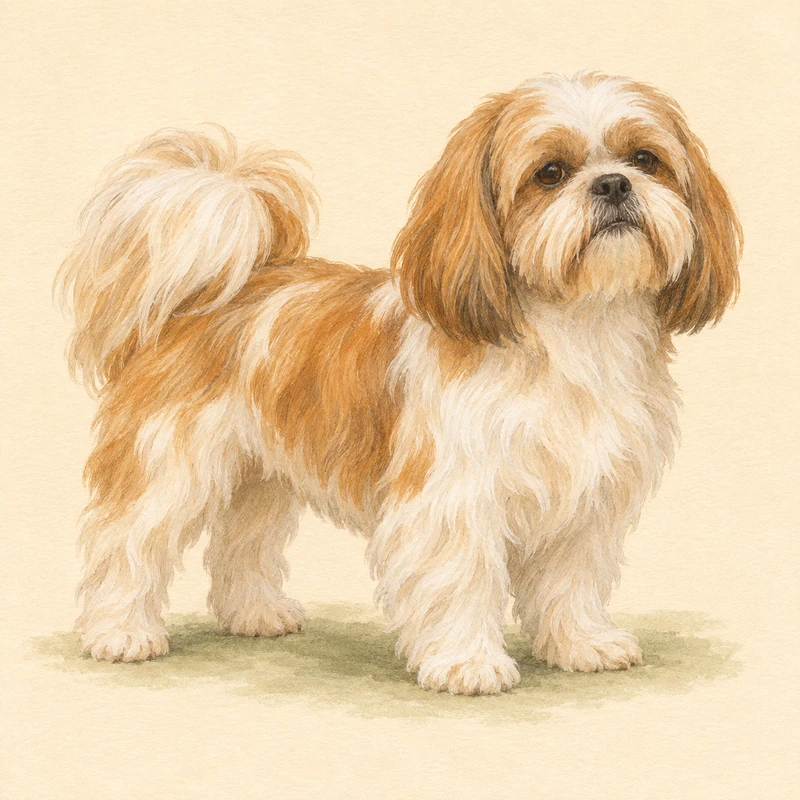
From China, with Tibetan ancestry
The Royal Kennel Club describes the Shih Tzu as originating in China with ancestry from Tibetan breeds. Dogs were shown in England in 1933, initially alongside Lhasa Apsos before the breeds were distinguished.
Read the evidence: Shih Tzu breed background — Royal Kennel Club
Small, alert and ready to learn
PDSA describes an alert, sociable companion that can enjoy learning. Individuals differ in confidence and tolerance of handling. Introduce grooming patiently rather than assuming that a companion breed automatically enjoys being brushed or carried.
Read the evidence: Shih Tzu — PDSA
Long hair does not mean one layer
The breed standard describes a long outer coat with a moderate undercoat. This is a double coat, even when kept in a practical pet trim. Hair should not obstruct vision or movement; a groomer can help choose a comfortable length.
Read the evidence: Shih Tzu breed standard — Royal Kennel Club
Make grooming predictable
Reward brief, comfortable handling. Start with an easy brush touch and stop before your dog becomes worried; avoid forcing cooperation.
Read the evidence: Reward-based training — Australian Veterinary Association
Food and portions
Choose complete life-stage food. Review portions, body condition and treats with your vet.
Read the evidence: Nutrition — Virginia Tech Veterinary Teaching Hospital
Movement without pushing through discomfort
Offer walks and play suited to your dog’s comfort. Their short face can bring breathing problems; noisy or effortful breathing should not be dismissed as normal. Ask your vet about exercise tolerance, especially in warm weather.
Read the evidence: Shih Tzu — PDSA · BOAS — Cornell University
As your dog grows older
Growing puppies need growth-appropriate food; older dogs need individual dietary review, especially with illness.
Read the evidence: Nutrition — Virginia Tech Veterinary Teaching Hospital
Take eye and breathing changes seriously
PDSA lists eye problems, brachycephalic obstructive airway syndrome and dental crowding among concerns. Squinting, a painful eye or altered breathing needs veterinary assessment. Severe breathing difficulty is urgent; a diet change is not treatment for these problems.
Read the evidence: Shih Tzu — PDSA · BOAS — Cornell University
Daily attention to a long coat
PDSA recommends daily brushing. Keep handling gentle and check beneath the surface. A shorter trim still needs maintenance, especially where hair tangles.
Read the evidence: Shih Tzu — PDSA · Coat Care: Preventing Matted Hair — USDA APHIS
Bathing is separate from brushing
Use lukewarm water and suitable dog shampoo, then rinse thoroughly. Keep water and shampoo away from eyes and ears.
Read the evidence: Dog grooming tips — ASPCA
Comfort comes first
Avoid cotton buds. Pain, redness or unusual ear odour needs veterinary advice rather than more cleaning.
Read the evidence: How to clean your dog’s ears — Cornell University
Sources & scope
Source retrieval dates are recorded individually below. Written as general owner education by Good Dog; not clinically reviewed or endorsed by the organisations linked below. Breed standards describe ideals, not guarantees. Screening advice can change. These are selected considerations, not a complete list of conditions.
- Shih Tzu breed background — Royal Kennel Club
History, activity and current health screening; not a prescription.
Source retrieved 2026-11-11 - Shih Tzu — PDSA
Selected health cautions and everyday care; fixed schedules, prices and promotional material not adopted.
Source retrieved 2026-11-11 - Shih Tzu breed standard — Royal Kennel Club
Coat and temperament ideals, not individual guarantees.
Source retrieved 2026-11-11 - Reward-based training — Australian Veterinary Association
Positive reinforcement and avoidance of aversive methods. Examples are editorial applications, not breed trials.
Source retrieved 2026-11-11 - Nutrition — Virginia Tech Veterinary Teaching Hospital
Complete life-stage food, individual portions and older-dog assessment. No US label wording prescribed for UK products.
Source retrieved 2026-11-11 - BOAS — Cornell University
Breathing signs, heat caution and emergency referral; no treatment instructions.
Source retrieved 2026-11-11 - Coat Care: Preventing Matted Hair — USDA APHIS
Friction-area matting, gentle prevention and professional help. No home scissor removal.
Source retrieved 2026-11-11 - Dog grooming tips — ASPCA
Lukewarm water, pet shampoo, rinsing and avoiding eyes/ears. Fixed bathing intervals and cotton-in-ear advice not adopted.
Source retrieved 2026-11-11 - How to clean your dog’s ears — Cornell University
No cotton buds; painful or inflamed ears require assessment rather than repeated cleaning.
Source retrieved 2026-11-11