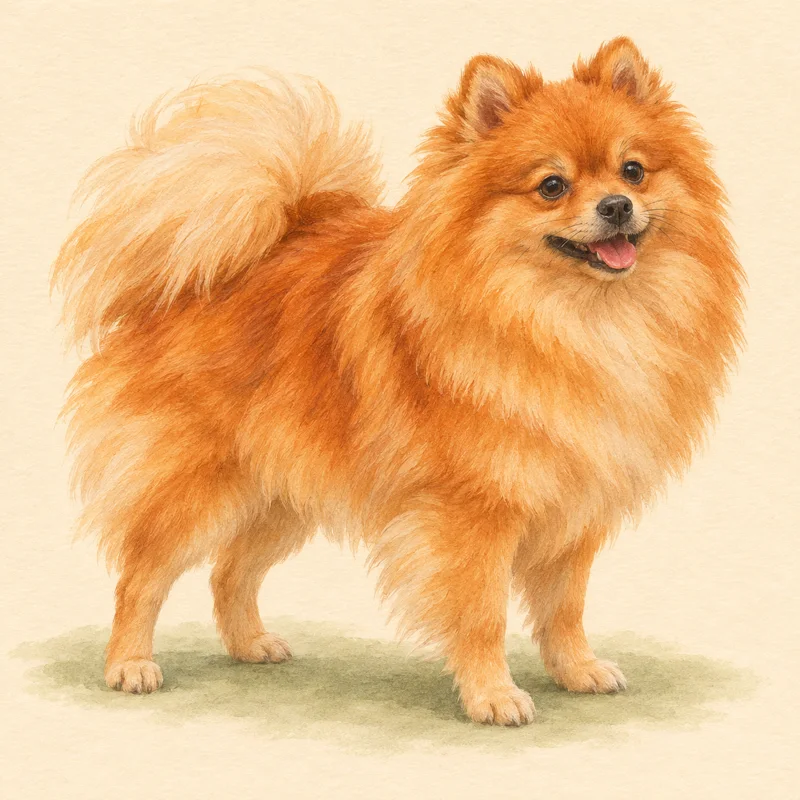
Where Pomeranians come from
The Pomeranian was developed from the larger German Spitz. The Royal Kennel Club records its appearance in Britain in 1870; Queen Victoria helped bring the breed wider attention. Its small stature belongs to that breeding history, not to a separate “teacup” care category.
Read the evidence: Pomeranian: breed background — Royal Kennel Club
Personality, without the promises
The breed standard describes an outgoing, lively companion. That is a broad ideal, not a guarantee about your puppy. A useful way to get to know a Pomeranian is to watch what they choose: exploring, playing, resting or keeping their distance. Give them space to opt out of handling.
Read the evidence: Pomeranian: breed standard — Royal Kennel Club
Yes, this is a double coat
A Pomeranian has a soft undercoat beneath longer, straighter outer hairs. A fluffy surface can hide knots underneath. Ask a groomer to demonstrate a gentle brush-and-comb technique for your dog’s coat, rather than choosing tools just because they are marketed for small dogs.
Read the evidence: Pomeranian: breed standard — Royal Kennel Club · Coat care: preventing matted hair — USDA APHIS
Small dog, real learning
Practise useful everyday skills such as coming when called, settling on a mat and comfortable handling. Keep the challenge small enough for your dog to succeed; size does not remove the need for training.
Read the evidence: Reward-based training — Australian Veterinary Association
Food for the individual
Choose complete food for the appropriate life stage. Adjust feeding to body condition and activity with veterinary guidance; health concerns or prescribed diets need individual advice.
Read the evidence: Nutrition — Virginia Tech Veterinary Teaching Hospital
Movement at their pace
Pomeranians still need opportunities to walk, sniff and play. The Kennel Club places them in a lower exercise category than working gundogs, but a breed guide is not an exercise prescription. Plan around your dog’s age, fitness, comfort and weather, with veterinary advice if their tolerance changes.
Read the evidence: Pomeranian: breed background — Royal Kennel Club
Puppy, adult and mature years
Young dogs: introduce experiences gently; stop when worried. Try a brush appearing beside the mat. Discuss safe socialisation with your vet.
All ages: choose safe activities your dog enjoys. An idea to try: finding a familiar toy placed nearby. These are options, not breed requirements or a test of intelligence.
Mature dogs: adapt activities to ability with veterinary advice. For example, bring the toy closer instead of asking for a longer search. Keep companionship and enjoyable choices in their day.
Read the evidence: Puppy socialisation — UC Davis Veterinary Medicine · Environmental enrichment — Purdue Canine Welfare Science · Senior dog enrichment — Cornell University
Health conversations worth having
PDSA highlights slipping kneecaps, inherited eye problems and tracheal collapse among the breed’s possible concerns. A predisposition is not a diagnosis. Ask about parental health screening and discuss limping, persistent coughing or changes in vision with your vet. The Royal Kennel Club also lists eye screening in its breed advice.
Read the evidence: Pomeranian health — PDSA · Pomeranian: breed background — Royal Kennel Club
Brushing and cleaning
Make coat checks part of calm time together. Pay attention where the collar rubs and behind the ears. Work gently and pause if your dog is uncomfortable. A groomer can tailor maintenance to shedding and coat density; there is no single bathing or clipping schedule for every Pomeranian.
Read the evidence: Coat care: preventing matted hair — USDA APHIS · Pomeranian health — PDSA
Keep care comfortable
Reward-based training is preferable to fear or pain. Pause if handling becomes difficult.
Avoid cotton buds in ears. Pain, redness or persistent odour needs a vet, not more cleaning.
Do not pull at severe mats or cut close to skin. Ask a professional for help. Bathing frequency should suit the individual.
Read the evidence: Reward-based training — Australian Veterinary Association · How to clean your dog’s ears — Cornell University · Coat care: preventing matted hair — USDA APHIS
Sources & scope
Source retrieval dates are recorded individually below. Written as general owner education by Good Dog; not clinically reviewed or endorsed by the organisations linked below. Breed standards describe ideals, not guarantees. Screening advice can change. These are selected considerations, not a complete list of conditions.
- Pomeranian: breed background — Royal Kennel Club
Origins and broad breed context; screening signposting.
Source retrieved 2026-11-10 - Pomeranian: breed standard — Royal Kennel Club
Coat description and breed temperament ideal, not an individual guarantee.
Source retrieved 2026-11-10 - Coat care: preventing matted hair — USDA APHIS
Friction-area mats, variable grooming frequency and risks from matting or scissors.
Source retrieved 2026-11-10 - Reward-based training — Australian Veterinary Association
Positive reinforcement; avoid fear/pain-based training.
Source retrieved 2026-11-10 - Nutrition — Virginia Tech Veterinary Teaching Hospital
Life-stage complete diet, body condition and individual nutritional assessment.
Source retrieved 2026-11-10 - Puppy socialisation — UC Davis Veterinary Medicine
Brief positive experiences and gentle handling; veterinary vaccination context.
Source retrieved 2026-11-10 - Environmental enrichment — Purdue Canine Welfare Science
Individual preferences and safe activity at all ages. Specific suggested games are editorial applications, not breed requirements.
Source retrieved 2026-11-10 - Senior dog enrichment — Cornell University
Adapt activity to ability and discuss safe choices with a vet.
Source retrieved 2026-11-10 - Pomeranian health — PDSA
Patellar, eye and tracheal concerns; coat care.
Source retrieved 2026-11-10 - How to clean your dog’s ears — Cornell University
Avoid overcleaning and cotton buds; pain/odour requires veterinary advice.
Source retrieved 2026-11-10