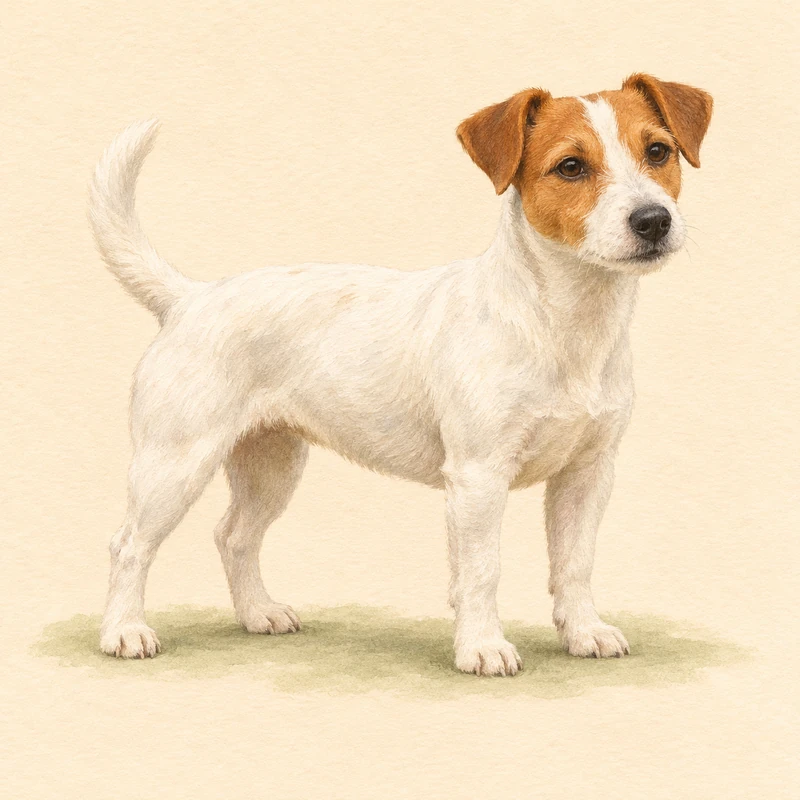
A working terrier, not a miniature lapdog
The breed takes its name from Reverend John Russell’s nineteenth-century working terriers. British dogs also contributed to development in Australia. The Royal Kennel Club recognised the Jack Russell Terrier in 2016; the similarly named Parson Russell is a separate breed.
Read the evidence: Jack Russell Terrier breed background — Royal Kennel Club · Jack Russell Terrier breed standard — Royal Kennel Club
Lively does not mean identical
The breed ideal is confident and outgoing. Many enjoy chasing and digging, but personality and past experience vary. Ask about the individual dog rather than assuming that every small terrier will fit the same home.
Read the evidence: Jack Russell Terrier breed standard — Royal Kennel Club · Jack Russell Terrier — PDSA
Three textures to recognise
A Jack Russell’s weather-resistant coat may be smooth, broken or rough. Match grooming to the actual texture rather than treating every Jack Russell as a smooth-coated dog.
Read the evidence: Jack Russell Terrier breed standard — Royal Kennel Club
Make recall worth choosing
Reward coming back and calm handling. Practise in easy settings first; use secure spaces where chasing could create danger.
Read the evidence: Reward-based training — Australian Veterinary Association · Jack Russell Terrier — PDSA
Food and portions
Choose complete life-stage food. Review portions, body condition and treats with your vet.
Read the evidence: Nutrition — Virginia Tech Veterinary Teaching Hospital
Small body, active day
Allow daily walks, sniffing and play rather than assuming small dogs need little movement. Breed exercise charts differ, so adapt activity to age, fitness and comfort rather than imposing one fixed daily target.
Read the evidence: Jack Russell Terrier breed background — Royal Kennel Club · Jack Russell Terrier — PDSA
As your dog grows older
Growing puppies need growth-appropriate food; older dogs need individual dietary review, especially with illness.
Read the evidence: Nutrition — Virginia Tech Veterinary Teaching Hospital
Ask about eyes, knees and coordination
PDSA lists slipping kneecaps, primary lens luxation and inherited ataxias among potential concerns. These are risks, not diagnoses. Ask about parental screening and seek veterinary advice for eye pain, limping or loss of coordination.
Read the evidence: Jack Russell Terrier — PDSA
Gentle maintenance
Check friction areas and remove loose hair gently. Ask a groomer about your dog’s texture; do not pull out painful mats.
Read the evidence: Coat Care: Preventing Matted Hair — USDA APHIS
Bathing is separate from brushing
Use lukewarm water and suitable dog shampoo, then rinse thoroughly. Keep water and shampoo away from eyes and ears.
Read the evidence: Dog grooming tips — ASPCA
Comfort comes first
Avoid cotton buds. Pain, redness or unusual ear odour needs veterinary advice rather than more cleaning.
Read the evidence: How to clean your dog’s ears — Cornell University
Sources & scope
Source retrieval dates are recorded individually below. Written as general owner education by Good Dog; not clinically reviewed or endorsed by the organisations linked below. Breed standards describe ideals, not guarantees. Screening advice can change. These are selected considerations, not a complete list of conditions.
- Jack Russell Terrier breed background — Royal Kennel Club
History, activity and current health screening; not a prescription.
Source retrieved 2026-11-11 - Jack Russell Terrier breed standard — Royal Kennel Club
Coat and temperament ideals, not individual guarantees.
Source retrieved 2026-11-11 - Jack Russell Terrier — PDSA
Selected health cautions and everyday care; fixed schedules, prices and promotional material not adopted.
Source retrieved 2026-11-11 - Reward-based training — Australian Veterinary Association
Positive reinforcement and avoidance of aversive methods. Examples are editorial applications, not breed trials.
Source retrieved 2026-11-11 - Nutrition — Virginia Tech Veterinary Teaching Hospital
Complete life-stage food, individual portions and older-dog assessment. No US label wording prescribed for UK products.
Source retrieved 2026-11-11 - Coat Care: Preventing Matted Hair — USDA APHIS
Friction-area matting, gentle prevention and professional help. No home scissor removal.
Source retrieved 2026-11-11 - Dog grooming tips — ASPCA
Lukewarm water, pet shampoo, rinsing and avoiding eyes/ears. Fixed bathing intervals and cotton-in-ear advice not adopted.
Source retrieved 2026-11-11 - How to clean your dog’s ears — Cornell University
No cotton buds; painful or inflamed ears require assessment rather than repeated cleaning.
Source retrieved 2026-11-11