A history across the Channel
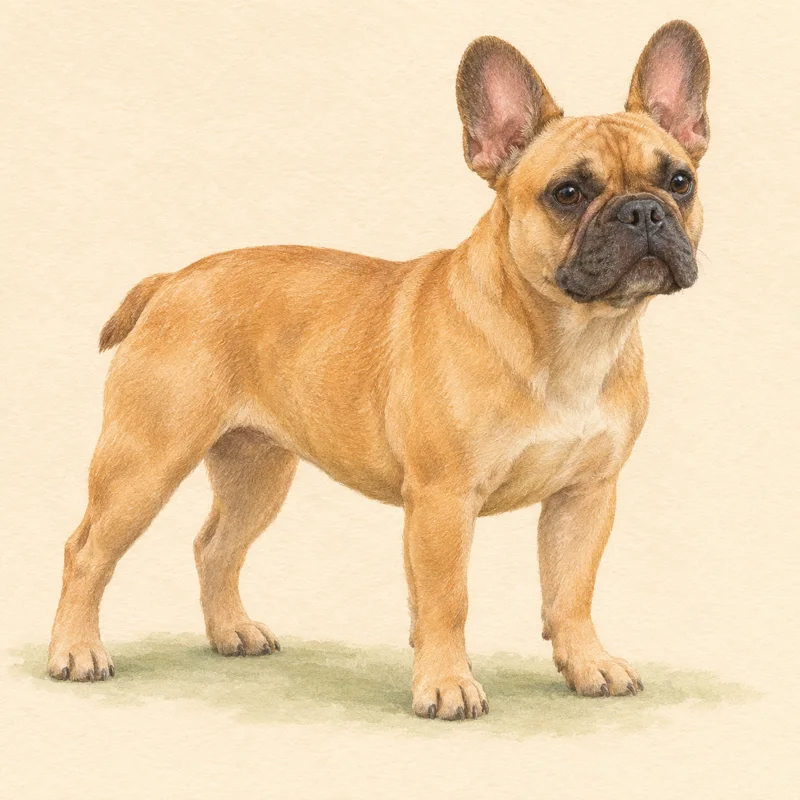
The French Bulldog developed partly from small British bulldogs taken to northern France by lace workers in the nineteenth century. It became established in France before returning to Britain, where the Kennel Club recognised it in 1906.
Read the evidence: French Bulldog: breed background — Royal Kennel Club
Playful does not mean effortless
The breed standard describes an affectionate, lively companion. Individual French Bulldogs can still find unfamiliar experiences difficult. Learn your dog’s signals, reward calm choices and allow breaks; a breed reputation cannot tell you whether a particular dog is comfortable.
Read the evidence: French Bulldog: breed standard — Royal Kennel Club
Short, smooth and still worth checking
The breed standard describes a short, smooth coat. This guide does not assume a dense double coat. Gentle brushing is also a chance to look at the skin, rather than merely remove hair. Skin folds need individual care advice if they become irritated or difficult to keep clean.
Read the evidence: French Bulldog: breed standard — Royal Kennel Club · Dog grooming tips — ASPCA
Prioritise comfortable learning
Teach everyday cues with rewards and stop before your dog becomes tired or distressed. A calm settling routine and comfortable handling are useful goals. Breathing difficulty should never be treated as stubbornness or something to push through.
Read the evidence: Reward-based training — Australian Veterinary Association · Brachycephalic obstructive airway syndrome — Cornell University
Food for the individual
Choose complete food for the appropriate life stage. Adjust feeding to body condition and activity with veterinary guidance; health concerns or prescribed diets need individual advice.
Read the evidence: Nutrition — Virginia Tech Veterinary Teaching Hospital
Let breathing and weather set the limits
Flat-faced dogs can have restricted airways. Cornell advises avoiding excessive heat and humidity and controlling activity in dogs affected by BOAS. Discuss safe exercise with your vet; do not try to meet a generic breed target when your dog is struggling.
Read the evidence: Brachycephalic obstructive airway syndrome — Cornell University
Puppy, adult and mature years
Young dogs: introduce experiences gently; stop when worried. Try a calm chin-rest on your hand. Discuss safe socialisation with your vet.
All ages: choose safe activities your dog enjoys. An idea to try: a simple choice between two familiar toys in a cool room. These are options, not breed requirements or a test of intelligence.
Mature dogs: adapt activities to ability with veterinary advice. For example, keep games close by; breathing discomfort always needs attention. Keep companionship and enjoyable choices in their day.
Read the evidence: Puppy socialisation — UC Davis Veterinary Medicine · Environmental enrichment — Purdue Canine Welfare Science · Senior dog enrichment — Cornell University
Noisy breathing needs attention
Brachycephalic obstructive airway syndrome (BOAS) can affect French Bulldogs. Persistent noisy breathing, poor exercise tolerance or gagging deserve veterinary assessment. Severe breathing difficulty, blue-tinged gums or collapse is an emergency: contact an emergency vet immediately. This page cannot assess airway function or recommend treatment.
Read the evidence: Brachycephalic obstructive airway syndrome — Cornell University
Brushing and cleaning
Use gentle coat care and check folds rather than assuming a short coat needs nothing. For surface dirt on the face, a soft damp cloth can be useful; gently dry the folds afterwards and keep cleaning products away from the eyes. Ask a vet about sore, smelly or persistently moist skin instead of adding products.
Read the evidence: Dog grooming tips — ASPCA
Keep care comfortable
Reward-based training is preferable to fear or pain. Pause if handling becomes difficult.
Avoid cotton buds in ears. Pain, redness or persistent odour needs a vet, not more cleaning.
Do not pull at severe mats or cut close to skin. Ask a professional for help. Bathing frequency should suit the individual.
Read the evidence: Reward-based training — Australian Veterinary Association · How to clean your dog’s ears — Cornell University · Coat care: preventing matted hair — USDA APHIS
Sources & scope
Source retrieval dates are recorded individually below. Written as general owner education by Good Dog; not clinically reviewed or endorsed by the organisations linked below. Breed standards describe ideals, not guarantees. Screening advice can change. These are selected considerations, not a complete list of conditions.
- French Bulldog: breed background — Royal Kennel Club
Origins and broad breed context; screening signposting.
Source retrieved 2026-11-10 - French Bulldog: breed standard — Royal Kennel Club
Coat description and breed temperament ideal, not an individual guarantee.
Source retrieved 2026-11-10 - Dog grooming tips — ASPCA
Gentle brushing by coat type, face cleaning and bathing. Older ear-cleaner advice not adopted; Cornell takes precedence.
Source retrieved 2026-11-10 - Reward-based training — Australian Veterinary Association
Positive reinforcement; avoid fear/pain-based training.
Source retrieved 2026-11-10 - Brachycephalic obstructive airway syndrome — Cornell University
Breathing symptoms, heat/exercise caution, urgent respiratory crisis.
Source retrieved 2026-11-10 - Nutrition — Virginia Tech Veterinary Teaching Hospital
Life-stage complete diet, body condition and individual nutritional assessment.
Source retrieved 2026-11-10 - Puppy socialisation — UC Davis Veterinary Medicine
Brief positive experiences and gentle handling; veterinary vaccination context.
Source retrieved 2026-11-10 - Environmental enrichment — Purdue Canine Welfare Science
Individual preferences and safe activity at all ages. Specific suggested games are editorial applications, not breed requirements.
Source retrieved 2026-11-10 - Senior dog enrichment — Cornell University
Adapt activity to ability and discuss safe choices with a vet.
Source retrieved 2026-11-10 - How to clean your dog’s ears — Cornell University
Avoid overcleaning and cotton buds; pain/odour requires veterinary advice.
Source retrieved 2026-11-10 - Coat care: preventing matted hair — USDA APHIS
Friction-area mats, variable grooming frequency and risks from matting or scissors.
Source retrieved 2026-11-10