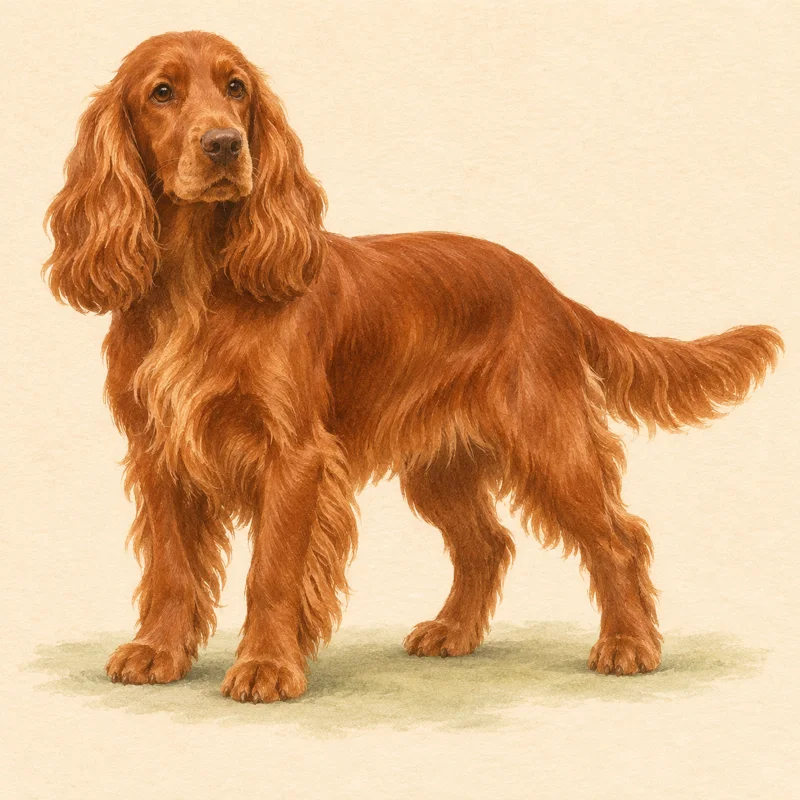
A spaniel with a working history
This guide covers the English Cocker Spaniel, known as the Cocker Spaniel in the UK, rather than the American Cocker. Its name comes from hunting woodcock; it was recognised as a separate variety in 1893. Ask about the individual dog’s breeding background and daily experience rather than relying on the name alone.
Read the evidence: Cocker Spaniel: breed background — Royal Kennel Club
Energy and affection can coexist
The breed standard describes an affectionate, animated dog with an interest in scent. These are tendencies, not a promise that every Cocker will enjoy every person or situation. Make room for rest as well as activity and get qualified help if behaviour worries you.
Read the evidence: Cocker Spaniel: breed standard — Royal Kennel Club
Look beyond the silky surface
The standard describes a silky coat with feathering on the body and legs. We do not assign every Cocker the same undercoat density from appearance alone. Longer areas can need more attention than the back; have a groomer assess your dog’s actual coat and show you how to reach tangles gently.
Read the evidence: Cocker Spaniel: breed standard — Royal Kennel Club · Coat care: preventing matted hair — USDA APHIS
Make coming back worthwhile
Recall, a calm lead walk and trading found objects are useful skills to practise. Reward-based teaching lets you build on a dog’s interests without frightening them. Scent-based games can be a practical way to turn part of a walk into shared attention.
Read the evidence: Reward-based training — Australian Veterinary Association · Cocker Spaniel: breed standard — Royal Kennel Club
Food for the individual
Choose complete food for the appropriate life stage. Adjust feeding to body condition and activity with veterinary guidance; health concerns or prescribed diets need individual advice.
Read the evidence: Nutrition — Virginia Tech Veterinary Teaching Hospital
Plan for a dog who likes to investigate
The hunting background makes a sniff-rich routine worth considering. Avoid treating a published exercise figure as either a compulsory minimum or a strict ceiling. Ask your vet to help set activity for growth, older age or health limitations, and watch how your dog recovers afterwards.
Read the evidence: Cocker Spaniel: breed background — Royal Kennel Club
Puppy, adult and mature years
Young dogs: introduce experiences gently; stop when worried. Try a brief, gentle ear check. Discuss safe socialisation with your vet.
All ages: choose safe activities your dog enjoys. An idea to try: a simple scent search in a safe enclosed space. These are options, not breed requirements or a test of intelligence.
Mature dogs: adapt activities to ability with veterinary advice. For example, put the scent target within easy reach. Keep companionship and enjoyable choices in their day.
Read the evidence: Puppy socialisation — UC Davis Veterinary Medicine · Environmental enrichment — Purdue Canine Welfare Science · Senior dog enrichment — Cornell University
Ask about more than a DNA panel
The Cocker Spaniel Breed Council discusses inherited eye conditions and familial nephropathy, alongside clinical eye and hip screening. A DNA result is not an all-purpose health certificate. Ask for the actual parents’ relevant results and let your vet explain what they do and do not tell you.
Read the evidence: Health — Cocker Spaniel Breed Council
Brushing and cleaning
Check feathering after walks for caught debris and developing tangles. Long ear hair needs attention too, but an ear check does not mean automatic deep cleaning. Persistent smell, soreness or head shaking should prompt a vet conversation rather than repeated home cleaning.
Read the evidence: Coat care: preventing matted hair — USDA APHIS · How to clean your dog’s ears — Cornell University
Keep care comfortable
Reward-based training is preferable to fear or pain. Pause if handling becomes difficult.
Avoid cotton buds in ears. Pain, redness or persistent odour needs a vet, not more cleaning.
Do not pull at severe mats or cut close to skin. Ask a professional for help. Bathing frequency should suit the individual.
Read the evidence: Reward-based training — Australian Veterinary Association · How to clean your dog’s ears — Cornell University · Coat care: preventing matted hair — USDA APHIS
Sources & scope
Source retrieval dates are recorded individually below. Written as general owner education by Good Dog; not clinically reviewed or endorsed by the organisations linked below. Breed standards describe ideals, not guarantees. Screening advice can change. These are selected considerations, not a complete list of conditions.
- Cocker Spaniel: breed background — Royal Kennel Club
Origins and broad breed context; screening signposting.
Source retrieved 2026-11-10 - Cocker Spaniel: breed standard — Royal Kennel Club
Coat description and breed temperament ideal, not an individual guarantee.
Source retrieved 2026-11-10 - Coat care: preventing matted hair — USDA APHIS
Friction-area mats, variable grooming frequency and risks from matting or scissors.
Source retrieved 2026-11-10 - Reward-based training — Australian Veterinary Association
Positive reinforcement; avoid fear/pain-based training.
Source retrieved 2026-11-10 - Nutrition — Virginia Tech Veterinary Teaching Hospital
Life-stage complete diet, body condition and individual nutritional assessment.
Source retrieved 2026-11-10 - Puppy socialisation — UC Davis Veterinary Medicine
Brief positive experiences and gentle handling; veterinary vaccination context.
Source retrieved 2026-11-10 - Environmental enrichment — Purdue Canine Welfare Science
Individual preferences and safe activity at all ages. Specific suggested games are editorial applications, not breed requirements.
Source retrieved 2026-11-10 - Senior dog enrichment — Cornell University
Adapt activity to ability and discuss safe choices with a vet.
Source retrieved 2026-11-10 - Health — Cocker Spaniel Breed Council
Inherited eye disorders, familial nephropathy, eye and hip screening.
Source retrieved 2026-11-10 - How to clean your dog’s ears — Cornell University
Avoid overcleaning and cotton buds; pain/odour requires veterinary advice.
Source retrieved 2026-11-10