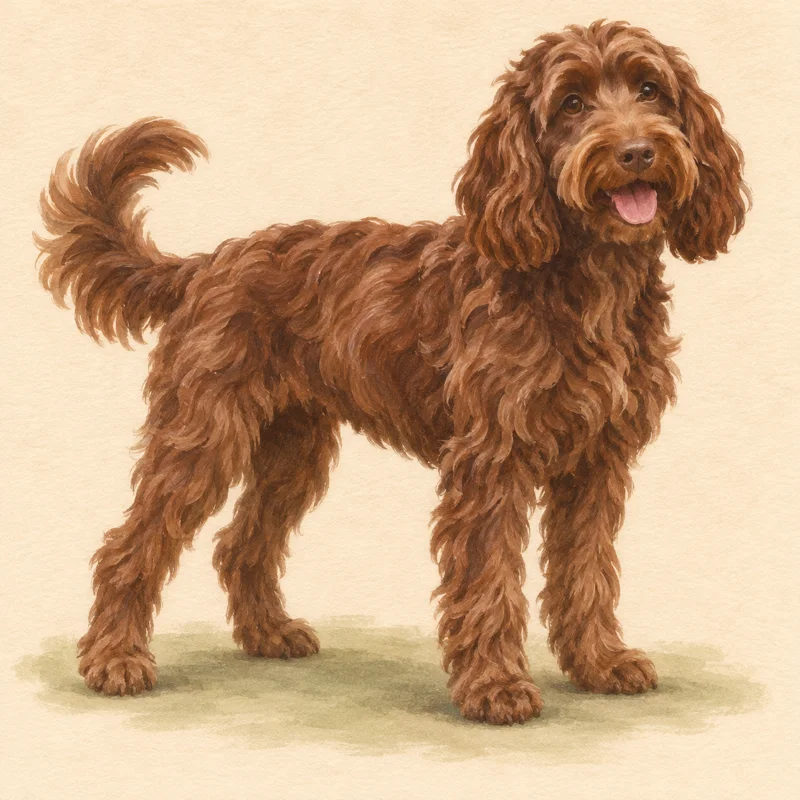
Understand the parentage
Cockapoo describes Cocker Spaniel and Poodle ancestry, including different generations and crosses back to a parent breed. The Cockapoo Club of GB explains why the name does not define one fixed size or appearance. Ask which Cocker and Poodle types are in the family.
Read the evidence: What is a Cockapoo? — Cockapoo Club of GB
Meet the dog, not the label
Cockapoos are often described as sociable and energetic, but the club also acknowledges variation in temperament. A cross cannot guarantee an easy family dog. Ask about the parents and the puppy’s early experiences, and leave room for your dog’s personality to develop.
Read the evidence: What is a Cockapoo? — Cockapoo Club of GB
A variable coat, not an allergy guarantee
Coats may be straighter, wavier or curlier, and shedding can vary. Do not assume a Cockapoo has a particular undercoat or is allergy-safe. The club describes increased matting as adult coat develops; a manageable puppy coat is not a reliable forecast of adult maintenance.
Read the evidence: What is a Cockapoo? — Cockapoo Club of GB · Grooming — Cockapoo Club of GB
Build skills before you need them
Reward calm handling, returning when called and settling. Gradually make practice more realistic rather than assuming Poodle ancestry means automatic obedience. Gentle introductions to brushing can help make coat care part of everyday learning.
Read the evidence: Reward-based training — Australian Veterinary Association · Grooming — Cockapoo Club of GB
Food for the individual
Choose complete food for the appropriate life stage. Adjust feeding to body condition and activity with veterinary guidance; health concerns or prescribed diets need individual advice.
Read the evidence: Nutrition — Virginia Tech Veterinary Teaching Hospital
Balance exploring and switching off
There is no single exercise allowance for all Cockapoos. Use parentage as background, then plan walks, play and rest around the dog in front of you. The club describes an energetic cross; if activity tolerance changes, ask your vet rather than adding more exercise by default.
Read the evidence: What is a Cockapoo? — Cockapoo Club of GB
Puppy, adult and mature years
Young dogs: introduce experiences gently; stop when worried. Try a moment of comfortable comb handling. Discuss safe socialisation with your vet.
All ages: choose safe activities your dog enjoys. An idea to try: finding a familiar toy in plain sight. These are options, not breed requirements or a test of intelligence.
Mature dogs: adapt activities to ability with veterinary advice. For example, make the search smaller when movement is less comfortable. Keep companionship and enjoyable choices in their day.
Read the evidence: Puppy socialisation — UC Davis Veterinary Medicine · Environmental enrichment — Purdue Canine Welfare Science · Senior dog enrichment — Cornell University
Crossbreeding is not a health guarantee
An RVC-led 2024 UK owner-survey study of dogs aged up to five found no statistically significant difference in most studied common-disorder comparisons between three Poodle crosses and their parent breeds. It cannot predict one puppy’s future or lifetime health. Ask for screening relevant to both parents; “crossbreed” is not a substitute for health records.
Read the evidence: The doodle dilemma — Bryson et al., PLOS ONE (2024)
Brushing and cleaning
Ask a groomer to demonstrate how to check through your dog’s coat, including areas that rub. Longer or curlier hair may need a different maintenance plan from a straighter coat. Comfortable coat length matters more than maintaining a particular teddy-bear look.
Read the evidence: Grooming — Cockapoo Club of GB · Coat care: preventing matted hair — USDA APHIS
Keep care comfortable
Reward-based training is preferable to fear or pain. Pause if handling becomes difficult.
Avoid cotton buds in ears. Pain, redness or persistent odour needs a vet, not more cleaning.
Do not pull at severe mats or cut close to skin. Ask a professional for help. Bathing frequency should suit the individual.
Read the evidence: Reward-based training — Australian Veterinary Association · How to clean your dog’s ears — Cornell University · Coat care: preventing matted hair — USDA APHIS
Sources & scope
Source retrieval dates are recorded individually below. Written as general owner education by Good Dog; not clinically reviewed or endorsed by the organisations linked below. Breed standards describe ideals, not guarantees. Screening advice can change. These are selected considerations, not a complete list of conditions.
- What is a Cockapoo? — Cockapoo Club of GB
Parentage and variation only. Health superiority and allergy claims not adopted.
Source retrieved 2026-11-10 - Grooming — Cockapoo Club of GB
Variable coats, adult coat change and regular handling. Ear plucking, product recommendations and fixed schedules not adopted.
Source retrieved 2026-11-10 - Reward-based training — Australian Veterinary Association
Positive reinforcement; avoid fear/pain-based training.
Source retrieved 2026-11-10 - Nutrition — Virginia Tech Veterinary Teaching Hospital
Life-stage complete diet, body condition and individual nutritional assessment.
Source retrieved 2026-11-10 - Puppy socialisation — UC Davis Veterinary Medicine
Brief positive experiences and gentle handling; veterinary vaccination context.
Source retrieved 2026-11-10 - Environmental enrichment — Purdue Canine Welfare Science
Individual preferences and safe activity at all ages. Specific suggested games are editorial applications, not breed requirements.
Source retrieved 2026-11-10 - Senior dog enrichment — Cornell University
Adapt activity to ability and discuss safe choices with a vet.
Source retrieved 2026-11-10 - The doodle dilemma — Bryson et al., PLOS ONE (2024)
RVC-led owner-reported cross-sectional study; parentage, common-disorder comparisons and study limitations.
Source retrieved 2026-11-10 - Coat care: preventing matted hair — USDA APHIS
Friction-area mats, variable grooming frequency and risks from matting or scissors.
Source retrieved 2026-11-10 - How to clean your dog’s ears — Cornell University
Avoid overcleaning and cotton buds; pain/odour requires veterinary advice.
Source retrieved 2026-11-10